
Marine Education Science and Community Inc. (MESAC) are local and internationally focused, marine science educators located at Ricketts Point Marine Sanctuary.
We offer a series of inclusive, diverse activities and workshops, both on the land and in the water for the community, offering something for everyone!
MESAC NEWS
Avian Bird Flu
As you may be aware, there have been confirmed cases of avian influenza H5N1 bird flu among migratory birds in Australia.
If you find a bird that is unwell or dead, please do not touch it.
Instead, leave the bird where it is, note its condition, time and location and immediately report it, by contacting the:
Emergency Animal Disease Hotline at 1800 675 888.
Further information can be found at: https://agriculture.vic.gov.au/biosecurity.
Generous Donation
A very generous donation of a Nikon Coolpix 5000 digital underwater camera and housing has been made to MESAC by Mr. John Kirkhope (left).
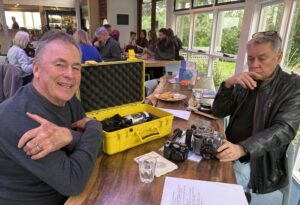
The camera will be used at the Ricketts’ Point sanctuary to monitor aquatic systems.
We plan to make it available, under supervision, to those who are keen to develop underwater photography skills.
Thank You Mr. Kirkhope.
Noctiluca Algal Bloom
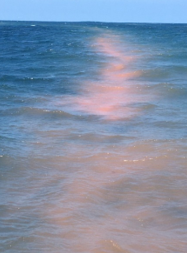
This is a natural occurrence that is semi-regular at this time of year particularly when there is a fair bit of calm weather and seas, and a similar situation occurred last year along the surf coast.
The algal bloom was initially seen, reported, and later sampled off Ocean Grove by PV Queenscliff staff, and has since been confirmed as Noctiluca scintillans.
Noctiluca is also known as “Sea Sparkles” and in high concentrations creates spectacular bioluminescent displays at night.
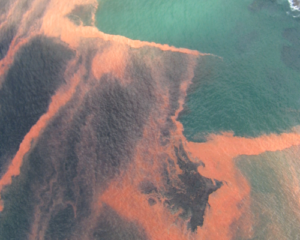
Caution !
Members of the public are advised to avoid direct contact with affected water. Direct contact may cause allergic reactions such as skin rashes or itchiness, sore ears or nose, or if swallowed, gastroenteritis, nausea and vomiting.
- If you make contact with affected water, wash and rinse your skin and hair, clothes and wetsuits in clean water. If you are concerned for your health, seek medical advice.
- If pets or animals make contact with affected water, wash and rinse them in clean water.
- Boating and fishing is still allowed in these areas, however care needs to be taken.
- Fish caught from affected areas should be rinsed and cleaned thoroughly in fresh water, and internal organs removed from the fish and discarded before eating.
- Do not eat mussels, crayfish or yabbies caught from the affected area.
We will be working with our partner agencies including the Victorian Fisheries Authority, Parks Victoria, Life Saving Victoria and the Environmental Protection Agency to ensure the public is informed of any changes and the potential risks.

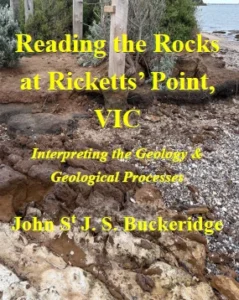
Reading the Rocks at Ricketts’ Point, Vic – Interpreting the Geology and Geographical Processes by John St James Buckeridge. more information and download click here
Erosion and what it can tell us about geological history.
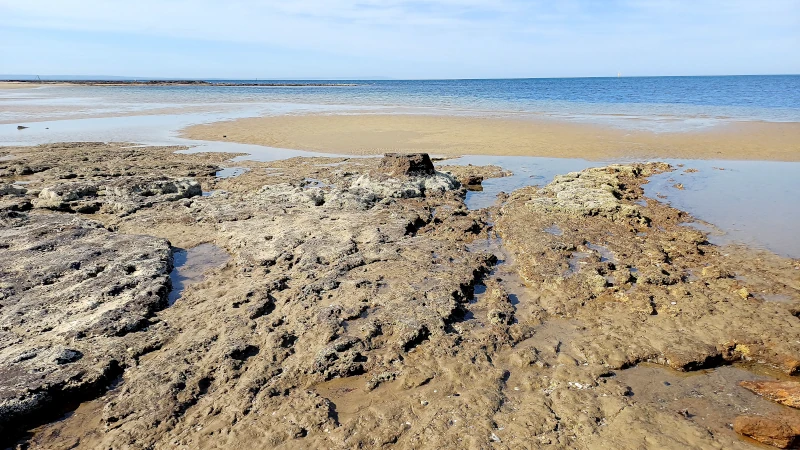
COLD SEEP
Sedimentary rocks that were deposited in the sea are the only rock types exposed at Rickett’s Point. These rocks were formed in three ways: as products of weathering and erosion of earlier rocks, from the remains of organisms that had mineralised shells, and from chemical precipitates.
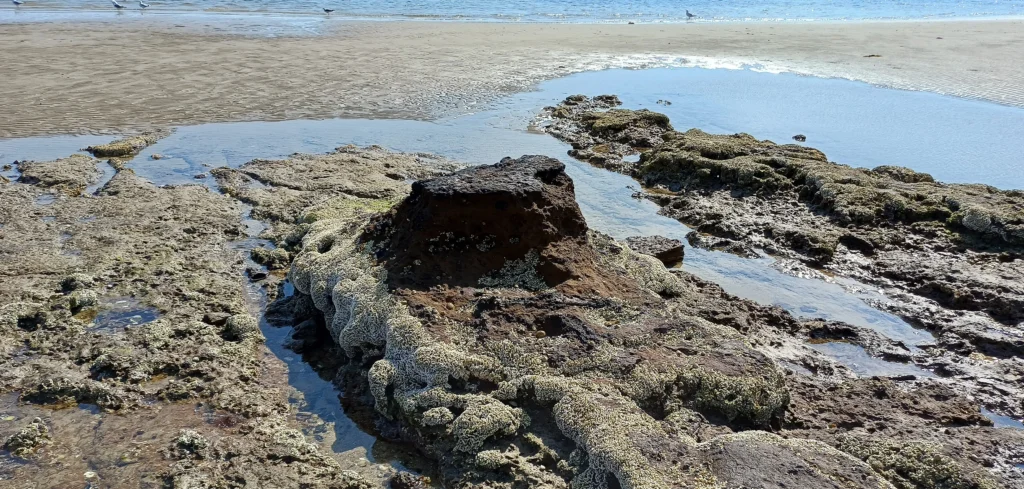
The most abundant rock type at Rickett’s Point is the Beaumaris Sandstone, which is exposed on the shore platform as dark and mid brown alternating beds. Some five and a half million years ago, following compaction and cementation of the sediments that comprise these rocks, they were uplifted and eroded. But erosion was not uniform. The more compacted and cemented the rock, the slower the erosion. At mid tide, in front of the Rickett’s Point Tea House, is an elevated structure that has eroded less than the surrounding rocks. In trying to determine why this happened, one needs to consider whether the sediments that comprise this structure were more compacted, or more cemented. It is the latter process that is the more likely.
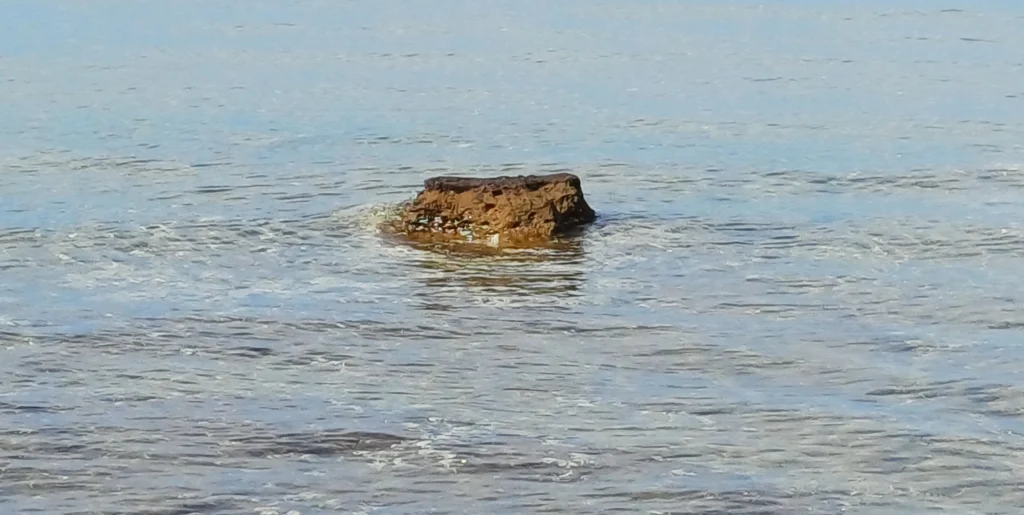
But how?
After deposition, groundwater moved through the partially compacted Beaumaris Sandstone sediments. At one site, the flow of groundwater, and the minerals dissolved in it, was greater than in the surrounding sediments. These mineralised fluids would have exited the sediments as a cold seep, and in doing so, they filled many of the small gaps between sediment grains. They thus made the sediments in the seep area more cemented.
Following uplift, the erosion of rocks on the platform began, but at the site of the cold seep, erosion was less effective, resulting in the structure preserved there today.
Written by Dr. John Buckeridge 2026
NEW SIGHTINGS
A new section has been created to report on wildlife spotted around Ricketts Point and along the Bay. Please click here to see the lastest sighting.
For General Enquiries please contact us at: MESACoffice@gmail.com